

Story Physics, Time to Relent?
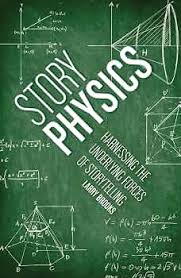
I’ve just finished reading Story Physics: Harnessing the Underlying Forces of Storytelling, by Larry Brooks, and have basically come to the decision that it might be time to relent on my idea of discovery writing (aka pantsing), at least when it comes to writing (constructing) a story. Before I get to that, though, some background on the book.
Yet Another Craft Book?
If you’ve read my newsletter or other blog entries, you’ll know that at some point several months ago I really started to feel like I’d lost my mojo on the novel I’ve been working on. This past summer I was wandering around the stacks at Book Mountain, one of Santa Fe’s fantastic used bookstores, credit burning a hole in my pocket, when I stumbled upon this craft book by Larry Brooks, Story Physics. I’ll admit, I was at a low point. I wondered why I was even bothering with yet another craft book. I have so many! But then, you know, books. Books always win, even when I’m surrounded by more than I can conceivably read in more than one lifetime. But I digress.
Pantsing Hasn’t Worked
Oh, boy, am I a fan of sitting down and just writing whatever comes to mind. Hilarious when I consider how much of a to-do list type of person I am. Maybe I thought this could be one area where I wouldn’t have to approach things this way. But then months (years) go by and yeah, those five hundred words a day get you to 182,500 words in a year, but so what? That’s a ton of words but a ton of words does not a novel make. The frustration sets in. You lose whatever motivation you originally had for your story because it’s just taking too freaking long to write it. So, yeah, pantsing hasn’t worked, unless we’re talking about writing in a journal and then, wow, success city!
If you settle for your first idea, generated from within the natural and sometimes ecstatic frenzy of pouring out words, or if you simply leap from one idea to the next organically, without holding them under the scrutinizing light of context (story physics and story architecture) … you may be reading a rejection letter soon.
Six Elements of Story Physics
Story Physics helps with all of this. It’s not the first of Brooks’s books on the subject, since it comes after his book Story Engineering: Mastering the Six Core Competencies of Successful Writing. Luckily, though, Brooks reviews those six core competencies and includes a section of useful diagrams that lay them out clearly and succinctly in Story Physics. I think Story Physics is more than enough to get you started.
The Help, The Hunger Games, and The Da Vinci Code in Story Physics
Story Physics focuses heavily on The Help, by Kathryn Stockett, and The Hunger Games, by Suzanne Collins. It also includes multiple mentions of Dan Brown’s The Da Vinci Code and Michael Connelly. You might hate all of these various writing styles or genres, but others don’t agree with you. The Help, with its “paltry” 11 million+ copies sold globally, was still a huge hit. All three of them have been made into successful movies or movie franchises, and The Da Vinci Code has sold more than 80 million copies worldwide. The books did something right.
Brooks provides an exceptionally useful section at the end of the book where he goes through The Help and The Hunger Games step by step, showing us exactly where and when the important story elements take place, and how those tie in to the story physics elements. He does, note, though, that “Other novels, past and present, are just as good and never get a fraction of this attention, and some don’t even get published.” However, your chances of having some success will increase if you have all the elements of story physics and story engineering in place. Maybe not on a global level, but still.
What Are Story Physics?
But what exactly are story physics? Brooks says there are six: a compelling narrative premise, question, or promise; dramatic tension, expositional pacing, hero empathy, a vicarious reading experience, and narrative strategy (point of view, framing devices, etc). You need all of these as well as the six story competencies (concept; character; theme; structure; scene execution; voice and style) for a story to be really great. Does it sound like a lot? It does to me, and I’m not sure how someone manages to keep it all in mind. This is where the nine sentences and the beat sheet come into play.
The Nine Sentences
Similar to other things I’ve written about, most notably the 15-word outline discussed in Jon Franklin’s Writing for Story, the nine sentences give you a way to (try) to describe your story in a short format. If the nine sentences don’t work, your story probably doesn’t work, says Brooks. In the nine sentences you describe: the hook; part one exposition (setup); your first plot point; part two exposition; the midpoint; part three exposition; the second plot point; part four exposition; and your ending/resolution. Brooks goes into great detail describing what and where these things happen in The Help and The Hunger Games. Even if you aren’t a fan, the analyses are incredibly useful.
A Quick Aside
A quick aside: one thing that I hadn’t been able to wrap my head around for some reason, but which Brooks demonstrates very clearly in Story Physics is the difference between a hook and an inciting incident. They’re not the same. The way I understand it is that the hook is what pulls you into the story. The inciting incident is what pulls your protagonist into the story. The inciting incident can (and should, according to Brooks) show up at about the 25% mark. For some reason, this difference is something that had always eluded me.
The Beat Sheet
What I found most useful, though, was the idea of the beat sheet. I’ve of course heard this term before, but Brooks really gives you an easy breakdown of the structure. Using this approach, you would have your hook in Scene 1 (not to be confused with your inciting incident, which he explains at length). Your first plot point (also not the same as your inciting incident) comes at around Scene 12. The midpoint would be at around Scene 30. Your second plot point follows at about Scene 42. Finally, you have your ending, or resolution, at about Scene 60. When the beat sheet works, your story will, too.
Most Eager
I gotta say, after reading Story Physics, I’m most eager to set up a beat sheet in Scrivener just to see what might happen. I don’t have a specific story idea in mind, but it’s nice to feel a little spark of motivation catching for a change. Who knows when or if I’ll ever get it right, but at least there’s that glimmer of something there. I’m not sad to say that I’m more and more attracted to the idea of writing with an outline or beat sheet. Nothing against discovery writing, and a lot depends on what you’re trying to accomplish, but maybe it’s time to relent and just go with the outlining flow. That sounds like a crazy, contradictory sentence, but maybe it will work for me. I’m willing to give it a try.
Michael Connelly
In line with my project to read all of Michael Connelly’s books in order of publication, I would like to analyze one of his stories using the information presented in Story Physics. As I said before, Brooks mentions Connelly more than once in his book. I’m already a fan, and although I can’t think of specific plot points in the last book I read, The Black Ice, I know they were there. I would like to know if Connelly writes with outlines. I’ll have to do some investigating, and analyze my next read of his, The Concrete Blonde.
No Recent Online Presence
Finally, I’ve seen no trace of recent online presence regarding Larry Brooks or his website, storyfix.com. I’m not even linking to it because it pops up as having security issues. Even going around those security warnings, I’ve had nothing but repeated server errors. It’s a pity because I’ve read good things about his website. The most recent thing I’ve been able to find is two articles by him on the Writer’s Digest University website. These were both updated in July 2026, but on the same day, which means they most likely weren’t written then. You can find various written and podcast interviews, although they mostly date back to 2020 or earlier. Still, they’re interesting and helpful. If you have news about Larry Brooks, I would love to get an update.
Are you a plotter or a pantser? Discovery writer or outliner? Do you use a simple sentence outline? A beat sheet? Let me know in the comments below.
Pulling at Threads is my occasional newsletter. It always accompanies my blog posts but I sometimes send infrequent updates on other goings on. If you want more of an “insider’s” view on what’s happening in my reading and writing life (or just to get notified of the latest post), you can sign up here.