

Up Where We Belong – An Officer and a Gentleman
If you read last month’s post, you know I recently finished Mark Z Danielewski’s latest, Tom’s Crossing. One of the many Eighties references in the book was to Up Where We Belong, the Grammy- and Oscar-winning hit song from the movie An Officer and a Gentleman. I know, I know, I could talk about something newer. But I’ve seen exactly one of this year’s Oscar-nominated films (the excellent Sinners). Anyway, I’m always up for some Eighties nostalgia, and An Officer and a Gentleman is, in my opinion, a movie that has stood the test of time.
In particular, I’m going to look at the movie’s story structure, and try my hand at coming up with a fifteen-word outline. More on that below, but first, a warning: there are spoilers ahead.
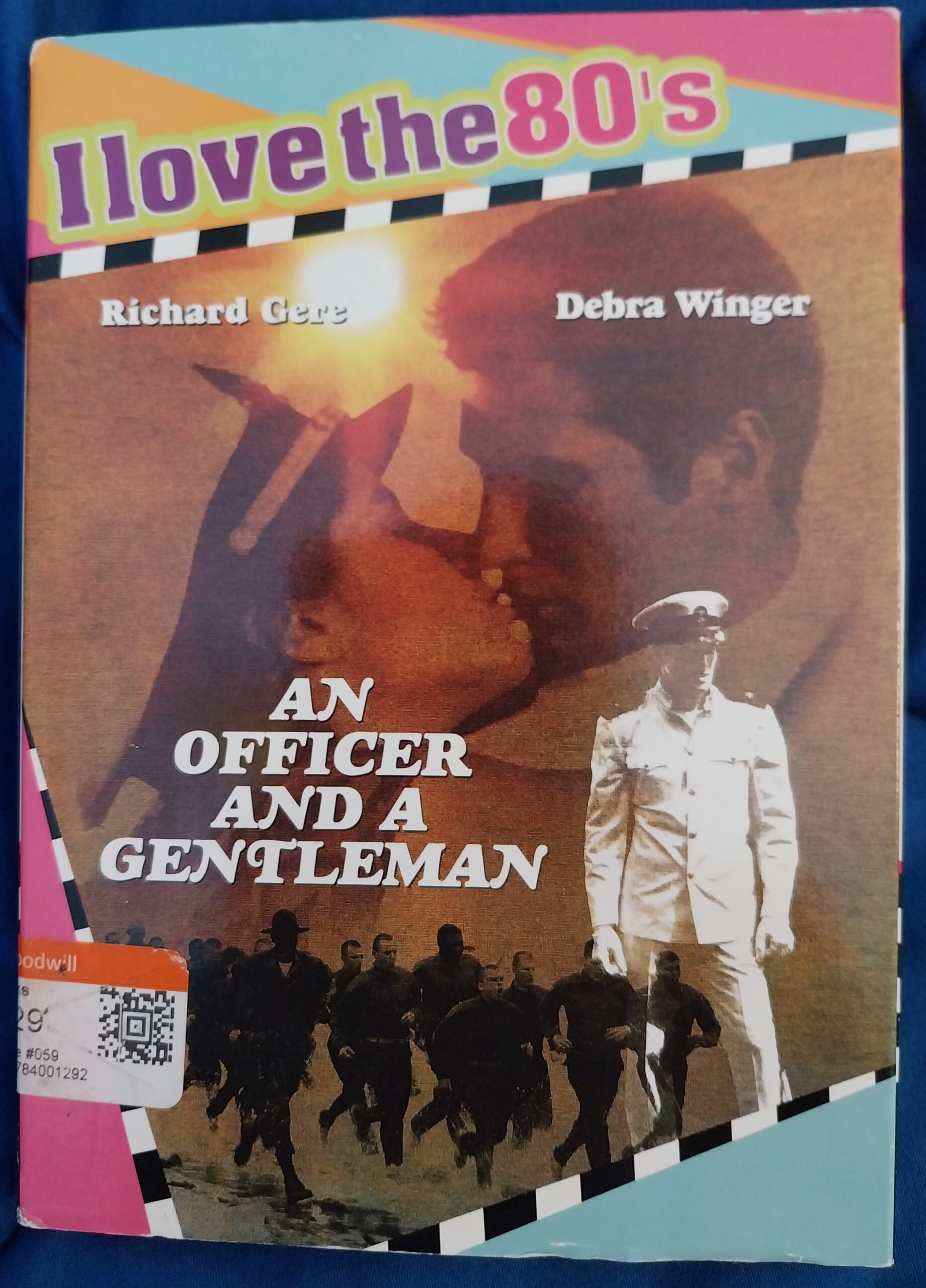
Many Accolades
An Officer and a Gentleman received many accolades. Lou Gossett, Jr., became the first Black actor to win Best Supporting Oscar as Emil Foley, a Marine gunnery sergeant. And Up Where We Belong, performed by Joe Cocker and Jennifer Warnes, won Best Original Song. Debra Winger, as local townie Paula Pokrifki, also received a Best Actress nomination.
Richard Gere, following up the hit American Gigolo, plays Zach Mayo, a new arrival at the Aviation Officer Candidate School (“AOCS”) in Port Townsend, Washington. He and the other candidates will only be in town for a short period of time. Foley warns them about the “Puget Sound debs,” local women whose primary goal is to marry Naval aviators.
Douglas Day Stewart, a veteran Hollywood writer, wrote the screenplay for An Officer and a Gentleman. He also received an Academy Award nomination, this one for Best Writing, Screenplay Written Directly for the Screen. The story was based on his own experience at the real AOCS in Florida.
The Story
Again, spoilers ahead, so if you haven’t seen the movie, you might want to stop here and go watch. The basic plot points are:
Zack Isn’t a Team Player
On the candidates’ arrival, Foley senses that Zack might not be officer material. As becomes evident, Zack isn’t a team player. He sells polished belt buckles and shined shoes to his classmates, and doesn’t help out a roommate before inspection. Foley busts him with the hidden “contraband.” If he had helped his roommate, would Foley have let it slide? We’ll never know.
“I Got Nowhere Else to Go!”
In a pivotal scene, Foley tells Zack he’s going to dismiss him. Zack, in desperation, pleads with Foley. He screams, “I got nowhere else to go!” Foley relents and Zack begins to change, becoming more of a team player.
Zack Distances Himself
In the meantime, Zack’s hooked up with Paula. He’s up front with her: he isn’t looking for anything long-term. He distances himself from Paula after he finds out that she’s the biological daughter of a former officer candidate who abandoned her and her mother. Although he’s made progress as a team player (he helps classmate Casey Seeger complete the obstacle course, even though it ruins his shot at the course record), Zack bails on Paula.
Zack Seeks Out Paula
When his best friend at the AOCS, Sid, disappears after his own Puget Sound deb, Lynette, rejects him, Zacks seeks out Paula. Zack and Paula find Sid dead at a local hotel, where he’s killed himself. Sid’s suicide makes Zack reconsider his priorities, but it basically pushes him even further away from Paula.
Zack is Alone
At the graduation ceremony, Zack is alone. He got what he wanted, which was to graduate while still remaining footloose. However, he’s got no one to share his experience with.
He Goes to the Factory
In one of the most famous (and most romantic) scenes in movie history, he leaves the graduation ceremony and goes to the factory where Paula and Lynette work. He walks through the factory, finally arriving at Paula’s station. He picks her up and carriers her off into the sunset, with Paula taking his officer’s cap and putting it on her own head.
Gere hated the ending. In the anniversary edition of the DVD, he said that he thought it was just so stupid and horribly cheesy. But he said that something happened when they filmed it. He noticed that all the extras were so emotional, that it had really hit everyone hard. The director decided to go with it. Thank heavens they didn’t choose a different ending based on Gere’s opinion!
Fifteen-Word Outline and An Officer and a Gentleman
Sometimes I like to try my hand at using Jon Franklin’s fifteen-word outline, which he discusses in Writing for Story: Craft Secrets of Dramatic Nonfiction. Despite the title, you can still outline your story, including a novel, using the information in his book. He devotes a whole chapter to this, so grab a copy if you want more insight. One of the key takeaways, though, is that the growth and change of the main character, “should be made a central part of the outline, so that it will emerge as the backbone of the story.”
Why Write One of These Outlines?
You may wonder what the point is of writing such an outline. As Franklin states, “With an outline you can think your story through, quickly and without great effort. Massive structural problems will stand out, and you can solve them with a stroke of a pen. You can think the story through, time and time again, very quickly, and still retain the energy, enthusiasm and freshness you need to do a good job when it comes time to actually write the story.” I don’t know about “without great effort.” Let’s see.
The Rules
I think it’s difficult to write these outlines. You think, oh, how hard could it be to write fifteen words? Using the rules Franklin sets out, the answer is, uh, extremely. You start with a Complication, continue with the Development (three focus points), and finish with the Resolution. Three words on each line, stated using action verbs, with the Resolution “matching” the Complication. In reality, this means the Resolution will leave your main character in exactly the opposite position as he or she was in at the start of the story. This mirrors what we talked about in my post on Robert McKee’s excellent book, Story.
Aside from using action verbs, your main character has to be in each statement; and you have to be able to illustrate the event described. You write the Complication first, then the Resolution, and THEN the Development. Ask yourself if the Development solves the Complication.
Fifteen Words on An Officer and a Gentleman
Granted, I’m writing this after-the-fact, so I’m trying to fit my outline around an already-finished movie. I still think it’s a useful exercise. Can I write fifteen words on An Officer and a Gentleman that fit the rules and make a decent outline?
First Try
Complication: AOCS tests/challenges/compels/impels Zack
I ran through various verbs, as you can see, but decided to go with “compels.” Getting into the AOCS was just the first hurdle. Once there, everything that happens is designed to make Zack look at himself, improve himself, be somebody he’s never been. If he wants to be an officer, he’s going to have to change!
Resolution: Zack survives AOCS? Zack becomes a better person? Zack changes?
Okay, so “Zack becomes a better person” doesn’t work because you can’t illustrate it. It’s not an event you can write. “Zack changes” also violates one of the rules, because it’s only two words. Finally, “Zack survives AOCS” doesn’t work because I don’t think you can illustrate it as an event. Furthermore, it doesn’t solve the Complication of the AOCS compelling Zack to do some self-reflection and improvement. In the end, I couldn’t think of how to write this resolution in a way that worked, or matched, the complication. So, I decided to move on to a second try.
Second Try
In my second try, I considered “AOCS restricts/blocks Zack.” I decided to go with “blocks” because what Zack wants, whether his reasons are good or bad, is to become a pilot for the Navy (this goes to his relationship with his father, which we haven’t gotten into, but it provides motivation). In order to do so, he has to clear several hurdles. Making it into the AOCS was just the first step. As I said above, Zack isn’t a team player, and for a lone wolf like him, that’s a big ask.
So, at this point I have:
Complication: AOCS blocks Zack
It follows Franklin’s rules because it uses an active verb; it names the main character; and it can be illustrated (Foley almost dismisses Zack; Paula could be seen as a kind of roadblock; and so on). So far, so good.
For the Resolution, I tried:
Resolution: AOCS allows/admits Zack
I decided to go with “admits.” In this case, it doesn’t mean that they admit Zack to the school, but that they admit him to the officer class. Again, it’s an action verb; the main character is in the statement, and you can illustrate the event. In fact, in the movie Zack is shown at graduation, alone. He’s got no one to share his experience with. It’s this experience that really makes him change his mind with respect to Paula and, on a larger scale, how he lives his life.
Development
Using the plot points I listed above, I filled in the Development section. I chose what I thought were the three biggest events in the movie: Foley threatening Zack with dismissal; Zack rejecting Paula the first time (after he has lunch with her and her family); and Zack losing Sid to suicide. I wrote them as follows:
Foley threatens Zack
Zack rejects Paula
Zack loses Sid
When Foley threatens Zack with dismissal, he really breaks Zack. But he also gets Zack to admit to himself, and to Foley, why he was really there at the AOCS in the first place. After the lunch with Paula and her family, rather than strengthening their relationship, it pushes Zack to distance himself even further from Paula. But, hey, he told her up front he wasn’t looking for anything serious, so no harm, no foul, right? Finally, Zack loses Sid, his one true friend at the AOCS. Rather than leaning on Paula, he pushes her away yet again.
Final Fifteen Words on An Officer and a Gentleman
My final fifteen words (and who knows if Douglas Day Stewart would agree) were thus:
Complication: AOCS blocks Zack
Development:
Foley threatens Zack
Zack rejects Paula
Zack loses Sid
Resolution: AOCS admits Zack
What do you think? Does it work according to Franklin’s rules? I think so, but do you have a different idea? Let me know in the comments below.
Up Where We Belong
Pulling at Threads is my occasional newsletter. It always accompanies my blog posts but I sometimes send infrequent updates on other goings on. If you want more of an “insider’s” view on what’s happening in my reading and writing life (or just to get notified of the latest post), you can sign up here.